

| General | Do not access any scaffolds unless you have received scaffold training. A competent person must inspect each scaffold before use. Make sure the competent person has performed this inspection before accessing the scaffold. A scaffold tag must be at each access point. 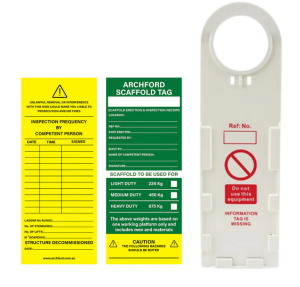 A green tag with a current inspection noted on the tag indicates the scaffold is safe for use. A red tag indicates that the scaffold is not safe. Never access an unsafe (red tag) scaffold. If you see any concerns while working on a scaffold, stop work and notify the competent person immediately. Do not work on scaffolds during high winds, during storms, or when covered with ice or snow. |
| Items to Watch | Guardrails are provided at heights above 6 feet and located at 42 inches with a midrail. Cross braces cannot be used as a complete guardrail system. They can be used as either a top rail or mid rail, but not both. Scaffold is fully planked with no holes or openings. Scaffold planks deflecting more than 1/60 of their span when loaded. Cracks and saw cuts on the scaffold plank. The base of the scaffold is on firm footing (baseplates with mudsills or casters). Adjusting screws must not be overextended. As a general rule, no more than 12 inches of thread should be showing. A stair tower or ladder is provided. Debris, tools, and material are not accumulating on the scaffold. The scaffold is supported to keep from falling by means of ties to the structure or bracing. Note this is only required if the scaffold exceeds a 4:1 height to width ratio (3:1 in California). The scaffold is level, square and plumb. Toeboards or adequate falling object protection is provided when personnel pass next to or under the scaffold. All wheels must be locked on mobile scaffolds. |
| Scaffold Use | Do not change or modify the scaffold unless you are trained and authorized by the competent person. Planks must be scaffold grade. Manufactured aluminum planks can only be used on scaffolds designed for their use. Scaffold parts and sections made by different manufacturers cannot be used together unless the components fit together without force and the structural integrity is maintained. Use designated ladders or stairs to access scaffolds. Never climb on the frame, guardrails, or cross braces. Do not rig from any scaffold member unless it is designed for that purpose. Work on suspended scaffolds requires specialized training. Personnel are required to have guardrails and tie off on suspended scaffolds. |
| Mobile Scaffolds | Required to have a diagonal brace or decking installed in accordance with manufacturer recommendations to prevent racking. Mobile scaffolds must have the wheels locked when in use. |