

| Before Beginning Work | Do not perform any digging unless underground utilities have been verified, dig permit has been obtained and potholing is conducted to locate utilities.  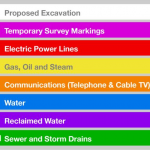 Only trained and authorized employees may enter excavations and only after the competent person has conducted an inspection of the excavation and determined it is safe to enter. |
| Barricades | Maintain barricades around excavations at least 6 feet from the edge of the excavation. Spoil dirt may be used to barricade 1 side of a trench or similar excavation. |
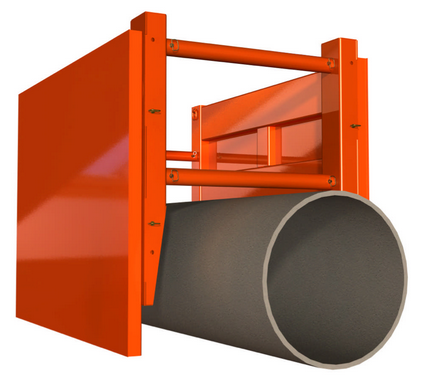
| Excavations | Keep any spoil piles and debris that could roll or fall into a trench at least 2 feet from the edge of the excavation. 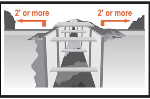 Excavations must be sloped, benched, or shored when deeper than 5 feet (4 feet Washington State). A competent person may determine that protection is necessary at depths less than 5 feet. Excavations greater than 20 feet deep require engineering for all protective systems. Type C soil cannot be benched. |
| Access | A ladder or other safe means of access is required within 25 feet of any worker in trench excavations deeper than 4 feet. Ladders must be secured and extend 36 inches above the landing.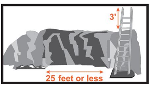 Do not step or jump over trenches. |
| Atmosphere | If there is a potential for a hazardous atmosphere, the atmosphere of the excavation must be tested by the competent person. |
| Soil Classification | Additional information on soil classification and protective measures is located in Appendix B. |